


Diagnosis and treatment
Fungal infections of the toenails and skin.
Fungal infections of the feet are among the most common infections and can affect both the toenails and the skin.
An accurate diagnosis confirms whether it is truly a fungal infection and helps determine the most appropriate treatment for each individual case.
What are fungal foot infections?
Fungal foot infections are caused by different types of fungi that thrive in warm, moist environments.
They can affect the skin (commonly known as athlete’s foot), the toenails (onychomycosis), or both at the same time.
Although they are often initially perceived as a cosmetic concern, without treatment they can gradually spread and become increasingly difficult to eliminate.
Areas that may be affected:
How and why do fungal foot infections develop?
Fungi thrive in warm, moist environments, where they find the ideal conditions to grow. The infection can occur after contact with contaminated surfaces, especially in swimming pools, communal showers, or changing rooms, or when small breaks in the skin or nails allow the fungi to enter.
The risk increases with factors such as:

What symptoms do they cause?
Yellow or white toenails
One of the earliest signs of infection, usually developing gradually.
Thickened and deformed toenails
The nail becomes thicker, harder, and more difficult to trim.
Brittle or fragile toenails
The nail loses strength, breaks easily, or begins to crumble around the edges.
Unpleasant odour
In some cases, an unpleasant smell may develop, especially when the infection affects the skin.
Itching and redness
Particularly between the toes when the infection affects the skin.
Flaking skin or cracks
The skin may become dry, whitish, flaky, or develop small cracks, especially between the toes or on the sole of the foot.
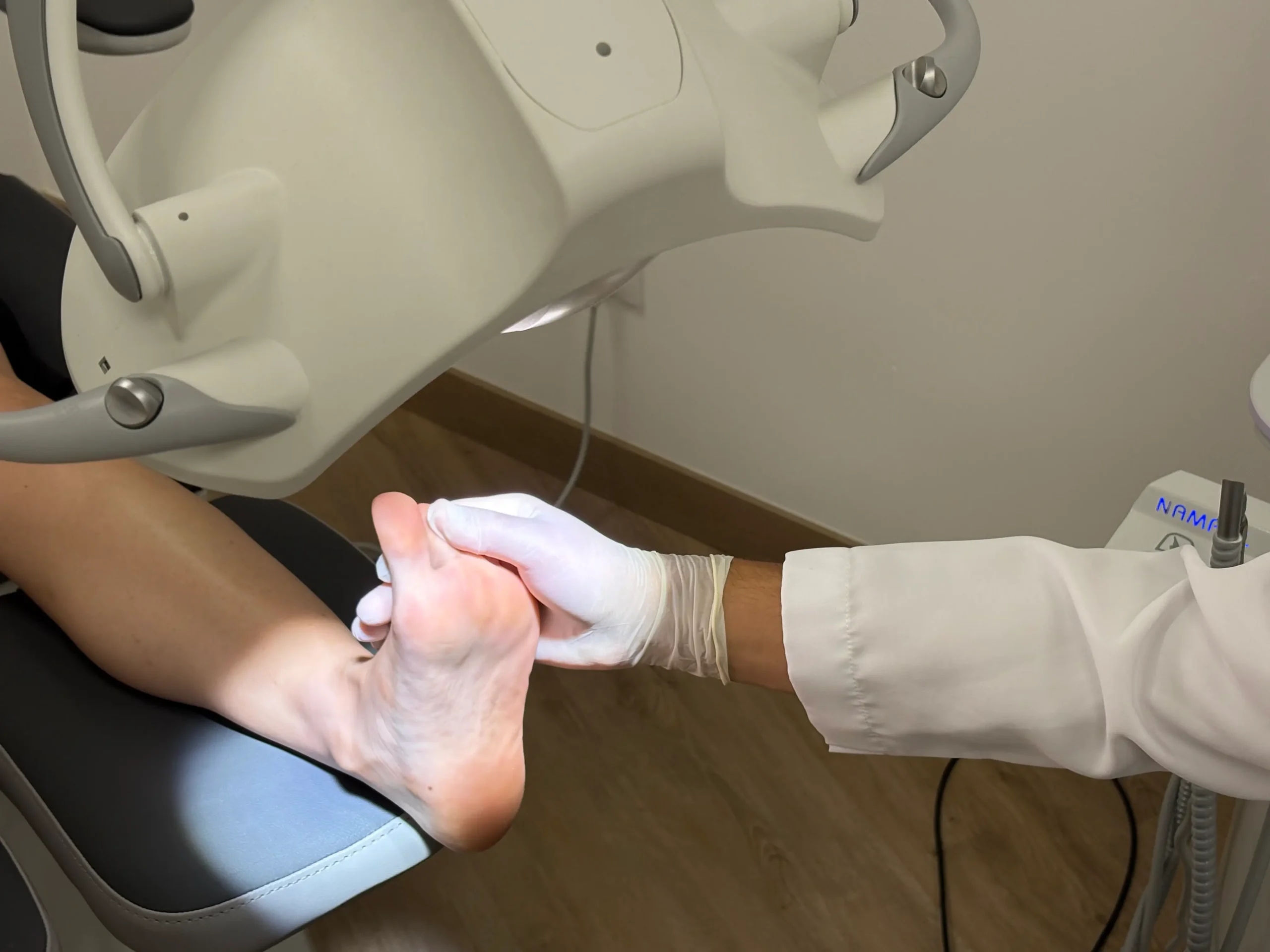
How can you tell if it’s really a fungal infection?
Not all yellow, thickened, or deformed toenails are caused by a fungal infection.
Conditions such as repeated minor trauma, psoriasis, or natural changes in nail growth can produce a very similar appearance.
For this reason, before starting any treatment, it is important to have a professional assessment to confirm the diagnosis and determine the most appropriate treatment.
How are they treated, and why is an accurate diagnosis important?
Treatment for fungal infections is not always the same.
The most appropriate treatment depends on the area affected, the extent of the infection, and whether it is truly a fungal infection or another condition with a similar appearance.
For this reason, identifying the underlying cause is the first step towards effective treatment.

What happens if fungal infections are left untreated?
Fungal infections rarely go away on their own.
Over time, they can spread to other toenails or to the skin of the foot, making them increasingly difficult to treat.
In people with diabetes or circulatory problems, they can also increase the risk of further complications, so early treatment is strongly recommended.
FREQUENTLY ASKED QUESTIONS
No. A yellow or thickened nail does not always mean you have a fungal nail infection. It can also be caused by repeated trauma, psoriasis, nail growth disorders or frequent use of certain nail polishes. That is why it is important to have your nail assessed before starting treatment.
Yes. Foot fungus can spread through direct contact or by walking barefoot in damp places such as swimming pools, changing rooms or public showers. Sharing towels, shoes or nail care tools can also increase the risk of infection.
No. Although fungal infections are more common with age, they can affect people of any age. Athletes, people with excessive sweating, those who wear closed shoes for long hours, and people who regularly use swimming pools or gyms have a higher risk.
It depends on the affected area and how severe the infection is. Skin fungus usually improves within a few weeks with the right treatment. Nail fungus takes much longer because the healthy nail needs to grow back completely, which may take several months.
It depends. If the infection only affects the skin, antifungal creams are often effective. If the fungus affects the nail, a combination of treatments may be needed depending on how advanced the infection is.
It is not recommended during treatment. Regular nail polish can reduce the effectiveness of some treatments and make it harder to monitor the condition of the nail. It is best to follow your podiatrist’s advice until the infection has cleared.
Yes. Even after successful treatment, fungal infections can return if the conditions that caused them remain, such as moisture, excessive sweating, certain types of footwear or nail damage. Good foot care and prevention are essential to reduce the risk of recurrence.
No. Even if the symptoms seem mild, fungal infections usually do not go away on their own and may spread over time. Early treatment often leads to faster recovery and lowers the risk of recurrence.
Yes. Many fungal nail infections are painless in the early stages, but they can gradually worsen, spread to other nails and cause complications, especially in people with diabetes or poor circulation.
Keep your feet clean and dry, wear breathable shoes, change your socks every day, wear flip-flops in public showers and swimming pools, and avoid sharing towels or footwear. These simple habits can help prevent fungal infections.
With nail fungus, improvement is seen as the healthy nail gradually grows and replaces the damaged part. With skin fungus, symptoms such as itching, redness and flaking disappear over time with treatment. Always complete the full course of treatment, even if symptoms improve sooner.
When should you see a podiatrist?
If you notice changes in the color or thickness of your toenails, persistent scaling, itching, or cracks in the skin of your feet, it is advisable to have them assessed as soon as possible.
Correctly identifying the underlying cause of the problem allows the most appropriate treatment to be started and helps reduce the risk of the infection progressing or recurring.