


Diagnosis and treatment of plantar warts
Plantar warts are a skin infection caused by the human papillomavirus (HPV). They usually develop on the sole of the foot and may cause discomfort when walking, especially in weight-bearing areas.
An accurate diagnosis makes it possible to distinguish them from other lesions, such as corns, and choose the most appropriate treatment to remove them effectively.
What are plantar warts?
Plantar warts are small skin lesions caused by an infection with the human papillomavirus (HPV).
The virus enters through small cuts or areas where the skin is damaged, causing an abnormal growth of the outer layer of the skin.
Although they can develop anywhere on the sole of the foot, they are most commonly found in weight-bearing areas.
- The sole of the foot.
- The heel.
- The ball of the foot.
- The toes.
How do they spread?
The virus is usually transmitted through contact with contaminated surfaces, especially in warm, moist environments such as:
- Swimming pools.
- Public showers.
- Changing rooms.
- Gyms.
The risk of infection increases when there are small cuts, cracks or areas of damaged skin.
Not everyone exposed to the virus develops a wart, as each person’s immune system also plays an important role.
What symptoms can plantar warts cause?
Symptoms may vary depending on the size, location and stage of the wart. Although they can go unnoticed at first, there are several characteristic signs that help identify them.
Pain when squeezing the lesion
Unlike a corn, plantar warts usually hurt when pressed from the sides or when bearing weight.
Small black dots
These are tiny blood vessels trapped within the wart and are one of its most characteristic signs.
Rough surface
The lesion usually has an irregular, rougher texture than the surrounding skin.
Interrupted skin lines
The natural skin lines on the sole of the foot are interrupted by the wart, which helps distinguish it from a corn.
Gradual increase in size
If left untreated, the wart may grow over time or new warts may develop nearby.
Bleeding when the lesion is scraped
Removing the outer layer of the wart may cause slight bleeding due to the small blood vessels it contains.
How can you tell if it’s a plantar wart or a corn?
This is one of the most common questions. Although they can look very similar, there are some important differences. When in doubt, a professional assessment can confirm the diagnosis and help avoid inappropriate treatment.
PLANTAR WART
Caused by a virus
May have small black dots
Usually hurts when squeezed from the sides
Can be contagious
CORN
Caused by pressure or friction
Does not have black dots
Usually hurts when direct pressure is applied
Is not contagious
How are plantar warts treated?
Treatment depends on the size, depth, location and stage of the plantar wart. The earlier treatment begins, the easier it is usually to remove the lesion and the lower the risk of new warts developing nearby.
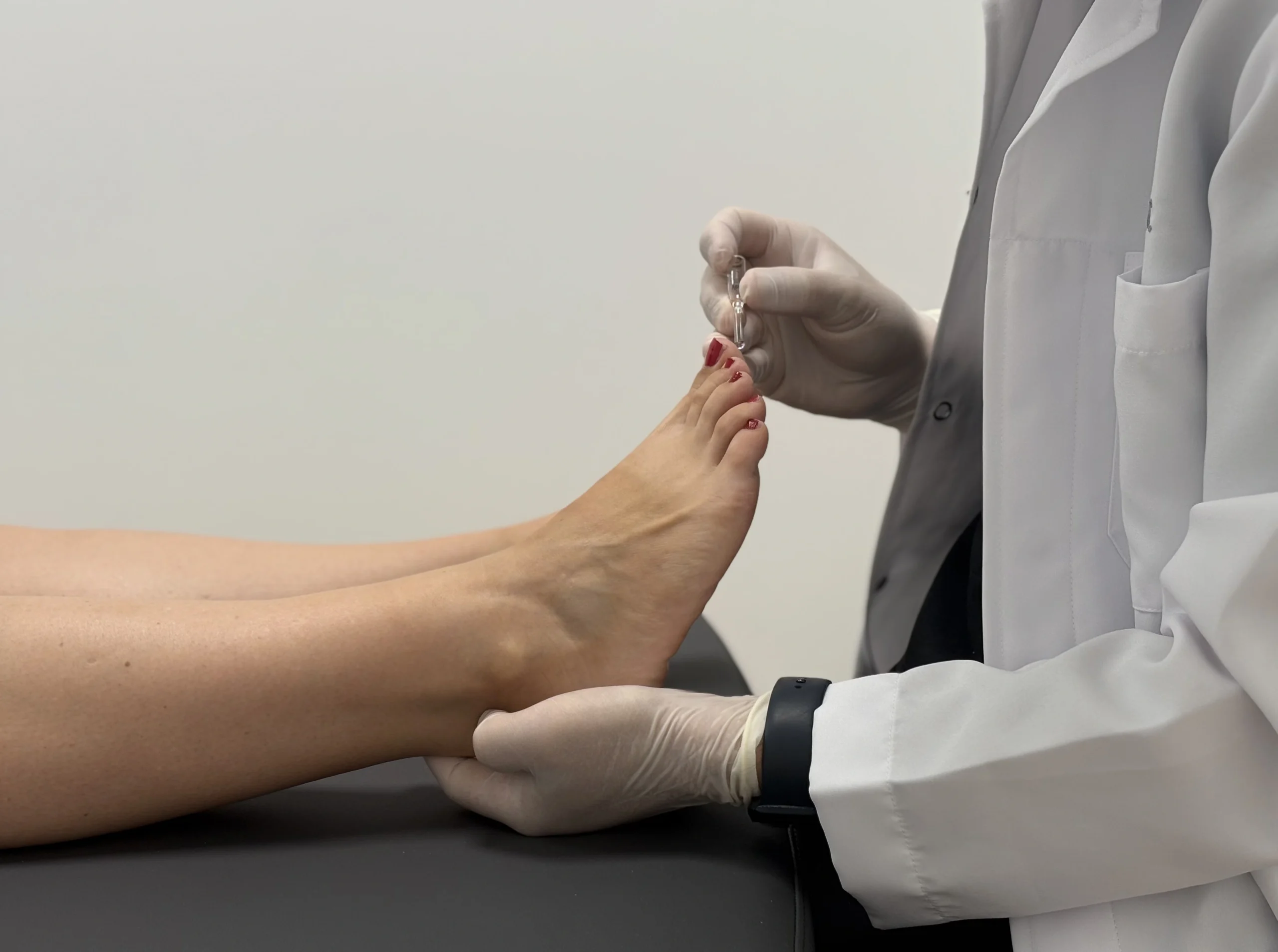
Chemical treatment
We apply specific products to the wart to gradually remove the affected tissue in a controlled manner. Several treatment sessions are usually required to achieve complete resolution.
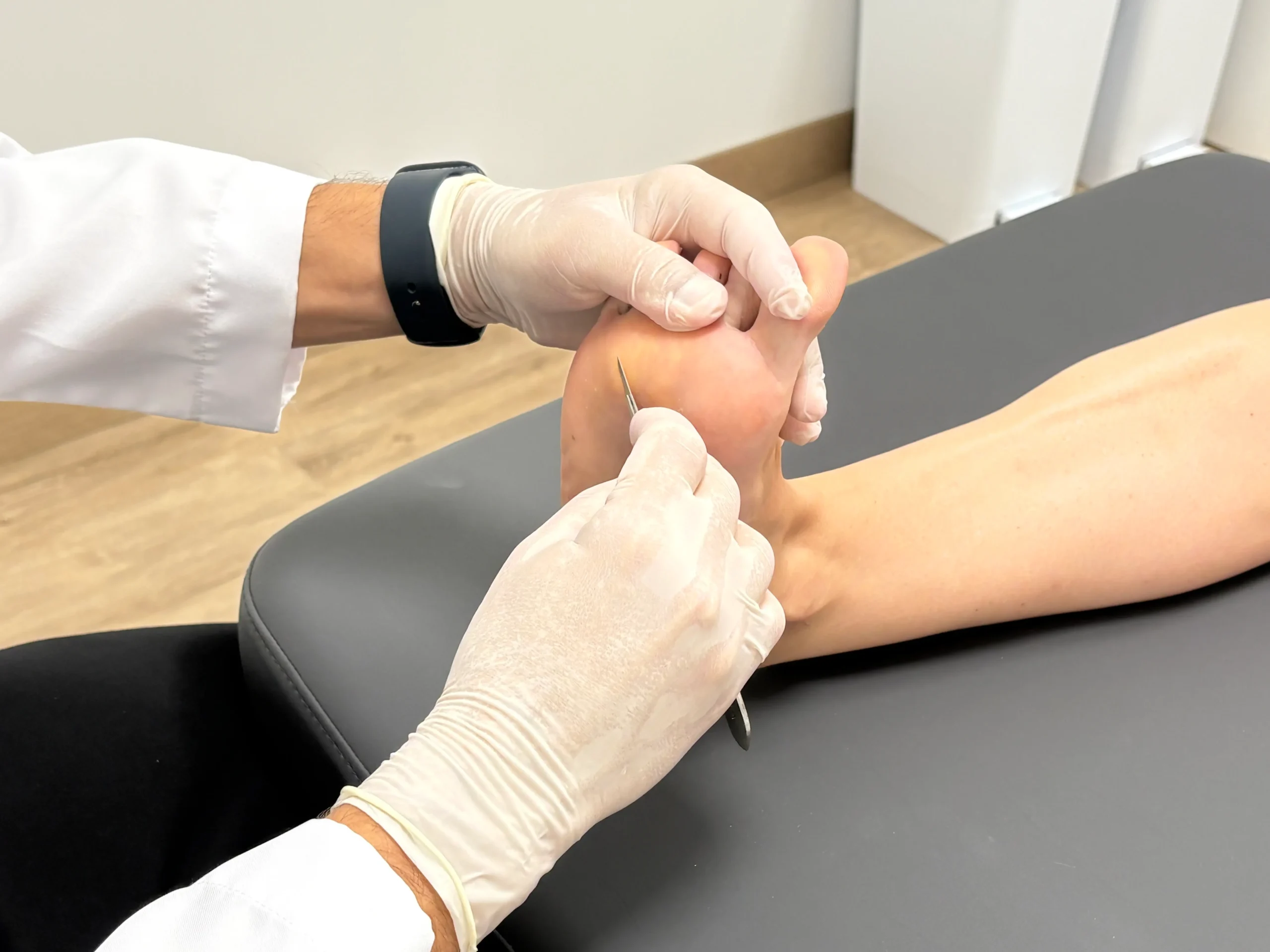
Removal of the affected tissue
At each appointment, we carefully remove the superficial layer of the wart to improve the effectiveness of the treatment and monitor its progress.
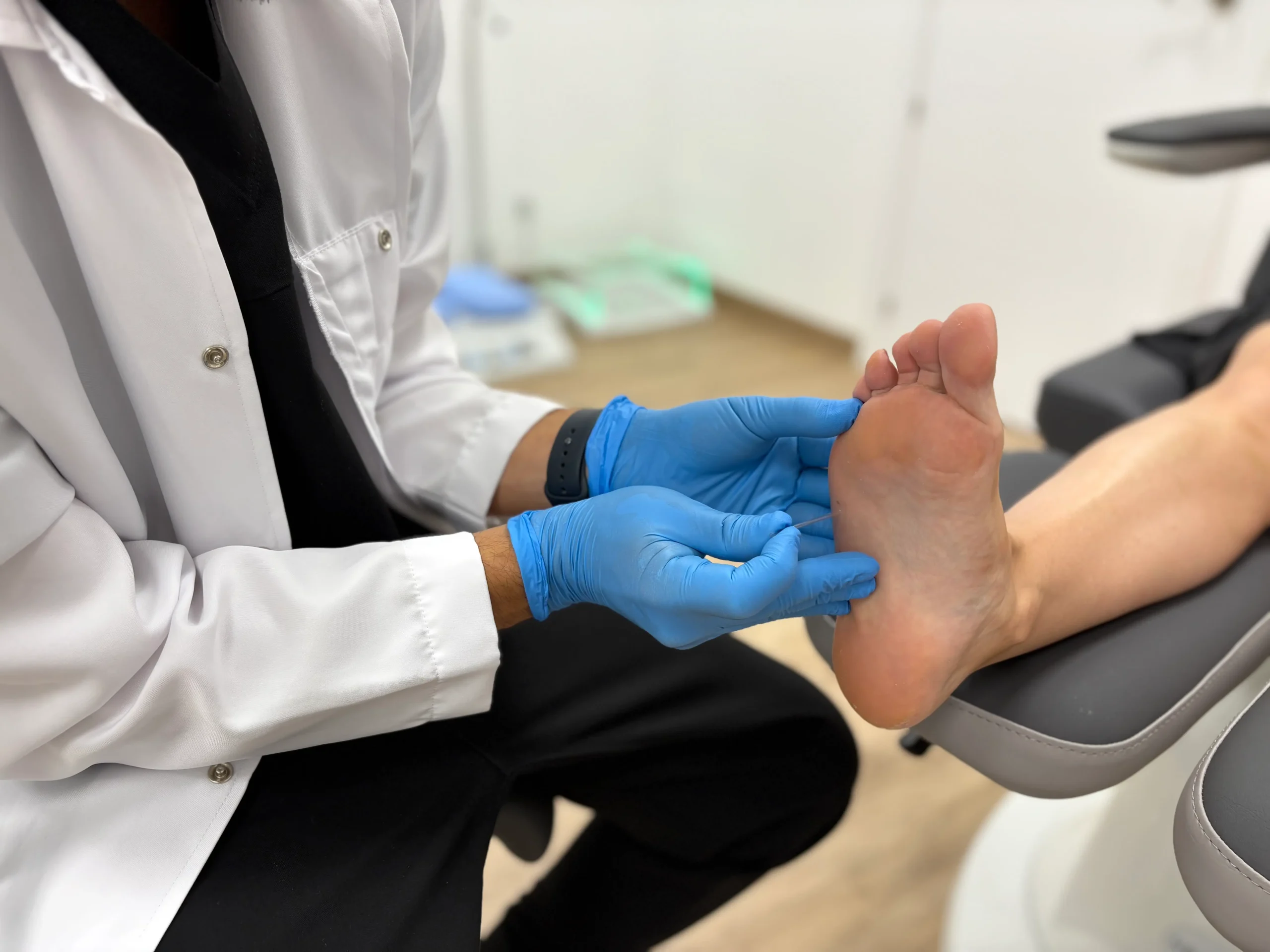
Follow-up and monitoring
We review the lesion regularly to assess its response to treatment and adapt the treatment plan if necessary until it has completely resolved.
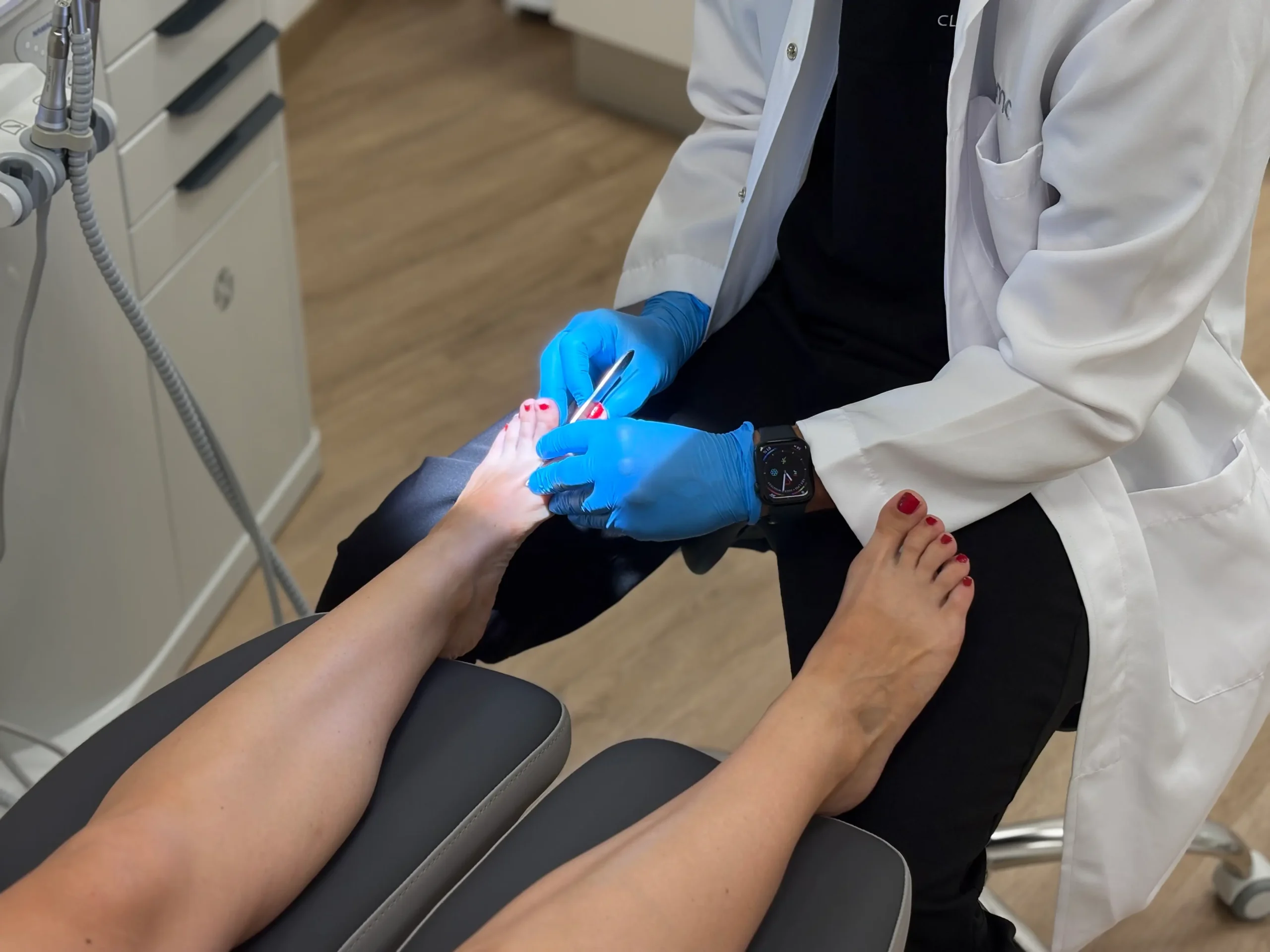
Additional treatment options
For resistant, larger or long-standing plantar warts, other treatment techniques may be recommended depending on the characteristics of each case.
What happens if they are left untreated?
Plantar warts rarely disappear quickly on their own.
Over time, they may increase in size, spread to other areas of the foot, or lead to the development of new warts nearby.
When they are located on weight-bearing areas, they often become increasingly painful and uncomfortable when walking.
Early treatment usually makes them easier to remove and helps reduce the risk of spreading the infection.
Frequently Asked Questions
Yes. They can spread through contact with contaminated surfaces, especially in swimming pools, communal showers and changing rooms.
In some cases they do, but the process can take months or even years. In most cases, treatment is needed to remove them.
It depends on the treatment used and the condition of the lesion. In general, any discomfort is mild and compatible with normal daily activities.
It depends on its size, depth and how long it has been present. Some plantar warts disappear after a few sessions, while others require a longer course of treatment.
Yes. Even after a plantar wart has been removed, it may return if the virus remains active or if a new infection occurs.
In most cases, yes. However, this will depend on the location of the plantar wart and the treatment being used.
Not always. Before starting any treatment, it is important to confirm that the lesion is actually a plantar wart and not a different skin condition.
If you have a lesion that hurts when walking, increases in size, does not disappear over time, or if you are unsure whether it is a plantar wart or a corn, it is advisable to have it assessed.
No. Attempting to cut or remove a plantar wart yourself can cause bleeding, spread the virus to other areas of the foot, and make future treatment more difficult. A professional assessment is the safest way to confirm the diagnosis and choose the most appropriate treatment.
Do you have a lesion on the sole of your foot and aren’t sure whether it’s a corn or a plantar wart?
A professional assessment can identify the cause of the problem and determine the most appropriate treatment to safely remove the lesion and prevent it from growing or spreading to other areas of the foot.